
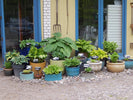
Cultiver des hostas en pot en céramique — Ce qu'il faut savoir !
, par Glenn Wilson, 2 min temps de lecture
, par Glenn Wilson, 2 min temps de lecture
Les hostas prospèrent en pots en céramique avec le bon mélange de terreau et les bons soins hivernaux. Découvrez le meilleur mélange sans terre, des conseils de drainage et des stratégies de protection contre le gel pour une culture en conteneur toute l'année.
Cultiver des hostas en pots en céramique toute l'année est tout à fait possible, mais cela nécessite le bon mélange de terre et quelques précautions intelligentes. Les hostas aiment l'humidité, mais ils pourrissent rapidement dans un sol gorgé d'eau. La terre de jardin standard ou les terreaux lourds ne conviennent tout simplement pas, surtout pendant un hiver canadien où un sol humide et dense peut geler, se dilater et fissurer vos pots ou étouffer les racines.
Le mélange idéal est très poreux, riche en matière organique et suffisamment stable structurellement pour résister au compactage au fil du temps.
Un mélange de terreau sans terre personnalisé vous donne un contrôle total sur le drainage et les nutriments. Mélangez en volume en utilisant un seau de jardin comme mesure :
L'ingrédient secret pour la survie hivernale : Ajoutez une généreuse poignée de gravier de poulailler grossier (granit concassé) ou de perlite supplémentaire dans le tiers inférieur du pot. Cela permet à l'eau de s'écouler librement par le trou de drainage lorsque la plante est en dormance.
Garder des hostas dans des pots en céramique pendant les hivers glacials nécessite quelques précautions spécifiques pour protéger à la fois la plante et la poterie :
Si vos hivers apportent des températures glaciales sévères et prolongées, déplacez les pots dans un garage ou un abri non chauffé – ou placez-les contre un mur de fondation abrité après le premier gel sévère. Ce petit tampon est souvent suffisant pour que le système racinaire émerge magnifiquement le printemps suivant.